25kW 20 m³/h 216 m Head Cast Stainless Steel Deep Well Submersible Pump for Elevated Irrigation Reservoir Filling
When an irrigation reservoir sits well above the water source, the pump needs enough head to lift groundwater and move it through the delivery pipeline. It also needs to refill the reservoir within the hours available for pumping.
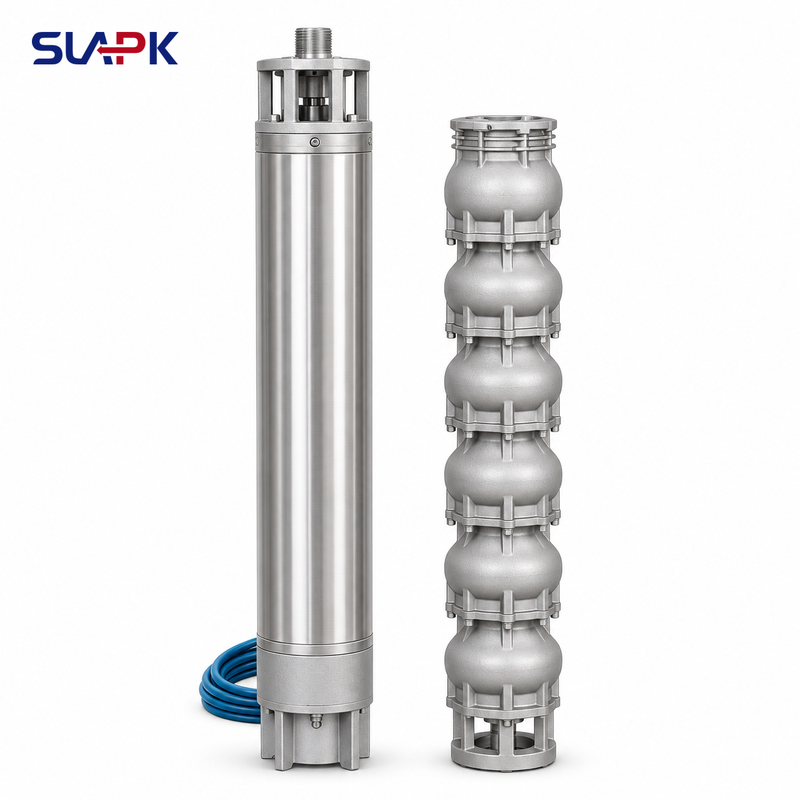
Our SLAPK 200QJ20-216/16 is a 25kW deep well submersible pump that can be assessed for this duty. Its nominal flow is 20 m³/h, and its nominal head is 216 m. This configuration uses cast stainless steel hydraulic components, with the material grade selected according to the water conditions and project requirements.
We start with your daily water demand, pumping water level and reservoir location. These details help us check whether this model suits the installation before you place an order.
Main Technical Specifications
| Model | 200QJ20-216/16 |
|---|
| Motor power | 25 kW |
|---|
| Nominal flow | 20 m³/h |
|---|
| Nominal head | 216 m |
|---|
| Catalog flow range | 18–22 m³/h |
|---|
| Catalog head range | 184–249 m |
|---|
| Outlet size | 2.5 inches |
|---|
| Hydraulic construction | Cast stainless steel configuration |
|---|
The nominal flow and head identify the model's stated duty designation. We confirm the required operating point against the performance curve for the quoted configuration. The maximum catalog flow and maximum catalog head should not be treated as a simultaneous operating point.
Reading the Model Code 200QJ20-216/16
The model code is read in four parts. 200 indicates the borehole size the model is designated for, QJ identifies the QJ series deep well submersible pump family, 20 m³/h is the nominal flow and 216 m is the nominal head, and 16 is the number of stages.
The borehole figure is a model designation rather than an installation guarantee. The pump diameter, riser pipe and cable are checked against your casing size and the installation drawing before the order is confirmed.
Filling a Reservoir Before Irrigation
Storing water before irrigation allows the well pump and the irrigation system to run on different schedules. For example, the reservoir may be filled between irrigation cycles, then supply the fields when water is needed.
The required pumping rate depends on how much water must be replaced and how much time is available. If the confirmed operating flow is 20 m³/h, transferring 100 m³ takes approximately five hours, assuming no water is drawn from the reservoir during filling.
If irrigation continues while the reservoir fills, that water use must also be included. Tell us the refill volume, available pumping hours and expected simultaneous demand so we can check the required flow.
What the 216 m Head Means for Your Project
The 216 m nominal head is not the pump installation depth or the maximum height of a reservoir above the wellhead.
The required total head includes the lift from the pumping water level to the delivery point, losses through pipes and fittings, and any pressure required at the outlet.
For an open reservoir, the main requirements are usually the elevation difference and delivery losses. If the same pump also feeds irrigation equipment directly, the equipment's pressure requirement must be included for that operating arrangement.
Send the pumping water level and the reservoir inlet elevation as separate measurements. This helps avoid confusing well depth with the work the pump must perform.
How to Calculate the Total Head for a Reservoir Filling Duty
The required total head is built up from four parts:
- The pumping water level, measured below the wellhead while the pump is running
- The delivery elevation, such as the reservoir inlet, measured relative to the wellhead
- Friction losses through the delivery pipe, elbows, valves and fittings
- Any pressure required at the outlet, which is normally zero for an open reservoir
Illustrative Example (for method only, not a selection)
- Pumping water level below the wellhead: 48 m
- Reservoir inlet elevation above the wellhead: 120 m
- Estimated friction loss in the delivery line and fittings: 22 m
- Outlet pressure required at an open reservoir: 0 m
- Indicative total head: 190 m
This figure is then compared with the performance curve of the quoted configuration. The example shows why the reservoir height on its own cannot confirm a model, and why the pumping water level has to be measured while the pump is running.
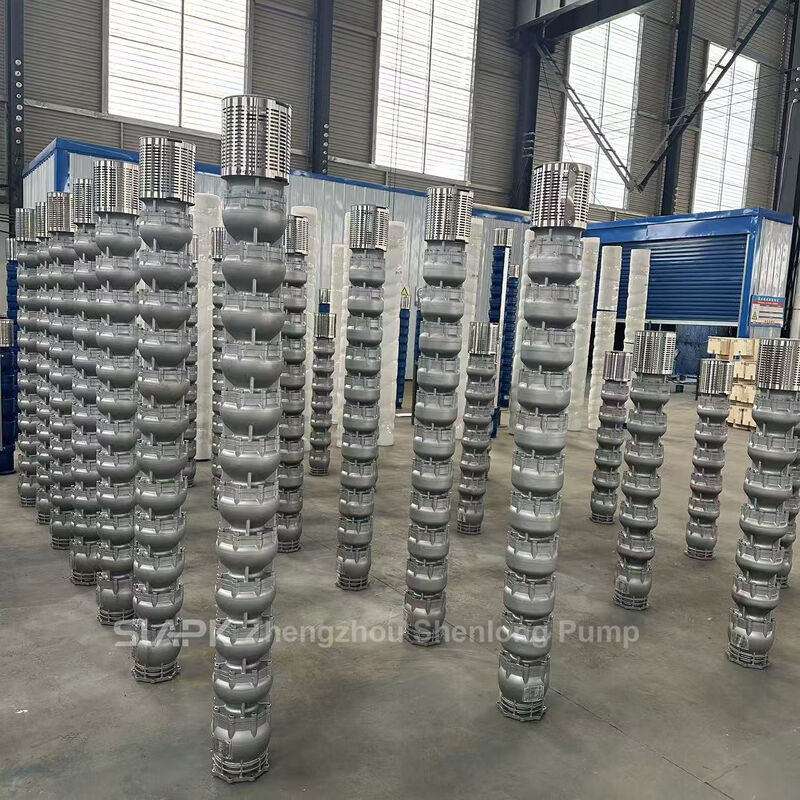
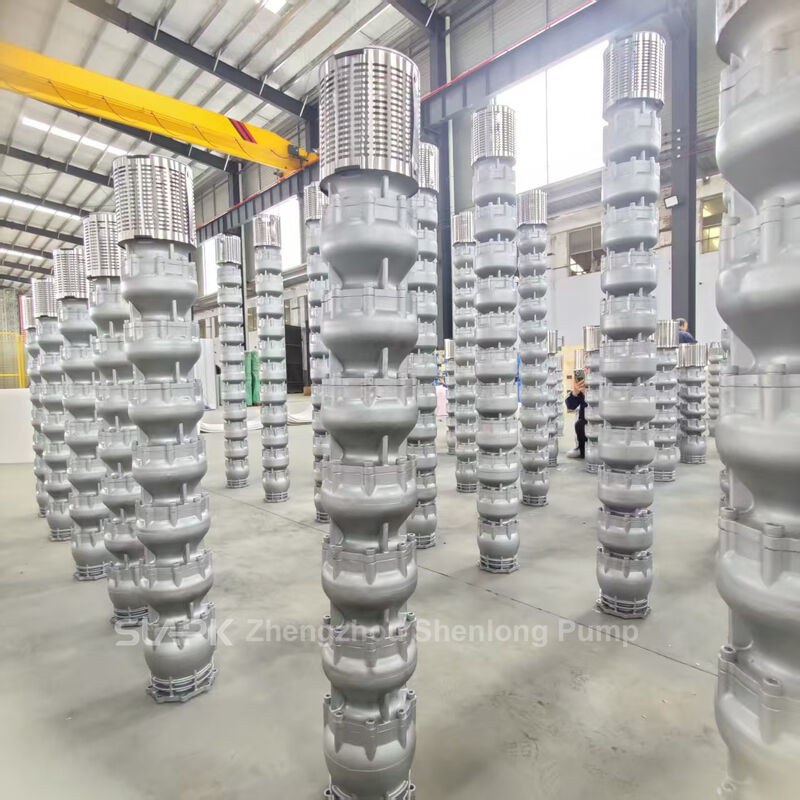
Cast Stainless Steel Hydraulic Components
The hydraulic components specified for this configuration are manufactured by casting. They guide water through the pump and build the head needed for delivery.
We identify the stainless steel grade and the parts covered by that specification in the quotation. The motor housing, shaft and other component materials are confirmed separately so the complete assembly is clear.
If the project specifies a particular material grade, include it with your inquiry. Water temperature, salinity and sand content also help us review the proposed configuration. Stainless steel does not eliminate abrasive wear from sand or make every grade suitable for every water source.
Check the Delivery Pipeline as Well as the Pump
For a high-head water transfer project, the delivery pipe is an important part of the selection. Its diameter affects friction losses, while its pressure rating and connections must suit the system.
The catalog lists a 2.5-inch pump outlet. This does not automatically determine the best diameter for the full delivery line, especially where the pipe is long.
Please provide the pipe length, diameter, material and route. If the route crosses high points before reaching the reservoir, show these on a sketch. Valve arrangements and any surge-control requirements should be reviewed as part of the pipeline design.
Water Availability During Long Pumping Periods
The well must be able to sustain the selected flow throughout the planned pumping period. A reservoir may need several hours of filling, during which the pumping water level can change.
We ask for pumping-test information and any dry-season water-level records. A falling water level increases the lift and may change the pump's output.
The installation also needs suitable submergence and motor cooling conditions. We confirm the proposed setting depth and assembly dimensions against the well information and installation requirements.
Installation and Commissioning Checklist
- Confirm setting depth, submergence and motor cooling requirements against the well data and the installation manual.
- Agree the riser pipe, valve arrangement and any surge-control requirements as part of the pipeline design.
- Support the cable along the rising main and protect it from rubbing or crushing; never lift or suspend the pump by its cable.
- Record voltage, running current, flow and discharge pressure at commissioning as the baseline for later checks.
- Confirm the reservoir filling rate against the pumping hours available before the irrigation cycle starts.
- Check that the reservoir inlet arrangement avoids air entrainment and backflow into the well when the pump stops.
Motor, Cable and Controls
The catalog specifies a 25kW motor for this model. Please provide the available voltage, frequency and phase so we can confirm the electrical configuration.
Cable length should reflect the complete route to the supply or control equipment, not only the depth of the pump. If you need reservoir-level control, a soft starter or a VFD, state that requirement when requesting the quotation.
For a replacement project, send the existing pump nameplate and control-panel details. We review these alongside the current water demand before confirming whether existing equipment can be retained.
Production and Testing Before Shipment
We produce pumps according to the confirmed order configuration. The quotation identifies the materials, motor requirements, included accessories and delivery arrangements.
Our pumps are tested before shipment and packed after they pass the required checks. If your project needs specific test records, material documents or inspection arrangements, please list them before ordering.
Lead time is confirmed according to the selected configuration, quantity and production schedule.
Maintenance Through the Irrigation Season
- Compare running current, flow and discharge pressure with the commissioning record at regular intervals.
- If these readings change, check the water level, power supply, valves, pipework and pump condition before deciding on corrective action.
- Inspect the discharge water for sand after commissioning and during the season; increased sand should be investigated rather than accepted.
- Keep spare parts identified with the order so that replacements match the same configuration.
- At the end of the season, record the final readings and note any change in drawdown for the next season's selection review.
Packing, Marking and Documents
Packing is agreed in the quotation and reflects the configuration, accessories and transport route. Marking follows the shipping documents agreed with you.
Where a project requires specific test records, material documents or third-party inspection, list these requirements with the inquiry so they can be agreed before production rather than after shipment.
Terms Used in Well and Reservoir Pump Selection
- Static water level — the water level in the well when the pump is not running.
- Pumping water level — the water level while the pump is running at the selected flow.
- Drawdown — the difference between the static and pumping water levels.
- Total head — the sum of lift, delivery elevation, friction losses and required outlet pressure.
- Friction loss — pressure lost as water passes through pipe, valves and fittings.
- Submergence — the depth of the pump below the pumping water level.
- Nominal duty point — the flow and head used to identify a model, not a guarantee for every installation.
- Safe yield — the flow a well can sustain without drawing the water level below the pump intake.
Frequently Asked Questions
Can this pump deliver 20 m³/h at 216 m head?
These are the model's nominal figures. We confirm the required operating point using the performance curve for the quoted configuration.
Can it fill a reservoir 216 m above the wellhead?
The pumping water level and pipeline losses must also be included. The reservoir elevation alone is not enough to confirm suitability.
Is the pump suitable for direct sprinkler irrigation?
It can be assessed for that duty, but the required sprinkler flow and pressure must be checked together with the well lift and pipeline losses.
Is the entire pump assembly stainless steel?
This page describes a cast stainless steel hydraulic configuration. The motor housing and other component materials are specified separately.
What if I do not know the required total head?
Send the pumping water level, reservoir elevation, pipe length and pipe diameter. Include any required outlet pressure, and we can review the available information.
Do the 50Hz and 60Hz versions perform the same?
No. The two versions use different performance curves, so the curve for your power supply is the one used for the selection and for reading flow and head.
How long will it take to fill my reservoir?
The time follows from the confirmed operating flow and the volume to be replaced. At 20 m³/h, 100 m³ takes approximately five hours, and any water drawn from the reservoir during filling has to be added to that volume.
Can the pump be controlled by a VFD or float switch?
Control requirements are agreed with the quotation. State whether you need level control, a soft starter or a VFD, and the equipment and its protection functions are listed in the supply scope.
Which details speed up the quotation?
The RFQ list below. The pumping water level, reservoir inlet elevation, pipeline data and electrical supply are the four items that most often delay a selection.
RFQ — Request an Irrigation Reservoir Pump Quotation
- Requested model: 200QJ20-216/16
- Application:
- Required flow or daily transfer volume:
- Available pumping hours:
- Reservoir capacity and water use during filling:
- Well internal diameter and total depth:
- Static water level below the wellhead:
- Pumping water level below the wellhead:
- Available well yield:
- Reservoir inlet elevation relative to the wellhead:
- Pipeline length, diameter and material:
- Required outlet pressure, if applicable:
- Water temperature, quality and sand content:
- Required stainless steel grade, if specified:
- Voltage, frequency and phase:
- Cable length and control requirements:
- Required accessories and documents:
- Quantity and delivery destination:
Contact SLAPK with your well and reservoir details. We will review the duty and provide a quotation identifying the proposed pump configuration and supply scope.
About SLAPK
- A pump manufacturer and exporter established in 1986, with 301–500 employees and 90–100% of output exported.
- OEM and ODM production, so nameplate, voltage, frequency and packing can be set for the destination market.
- Selection support on borehole and reservoir duties: send the water level, flow, head and power supply and the model and curve are checked against them.
- ISO 9001:2015 manufacturer; product certification requirements can be discussed per project.
Next Step
Send the completed RFQ list or a short description of the duty. We will review the pumping water level, reservoir elevation and pipeline details, then confirm the proposed configuration, the performance curve for that configuration, and the supply scope in a quotation.


 Your message must be between 20-3,000 characters!
 english
 français
 Deutsch
 Italiano
 Русский
 Español
 português
 Nederlandse
 ελληνικά
 日本語
 한국
 العربية
 हिन्दी
 Türkçe
 indonesia
 tiếng Việt
 ไทย
 বাংলা
 فارسی
 polski