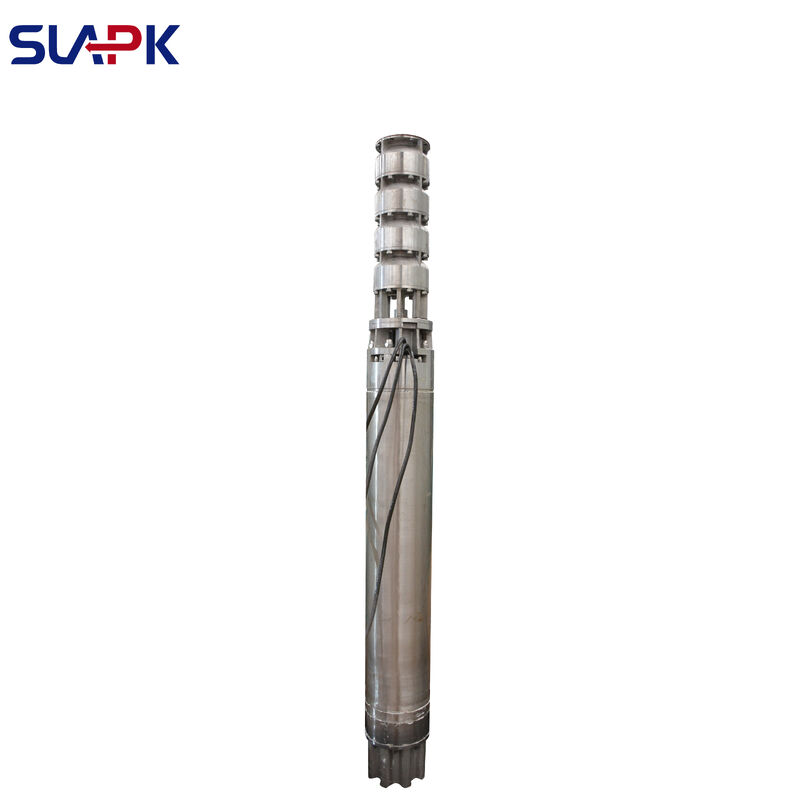
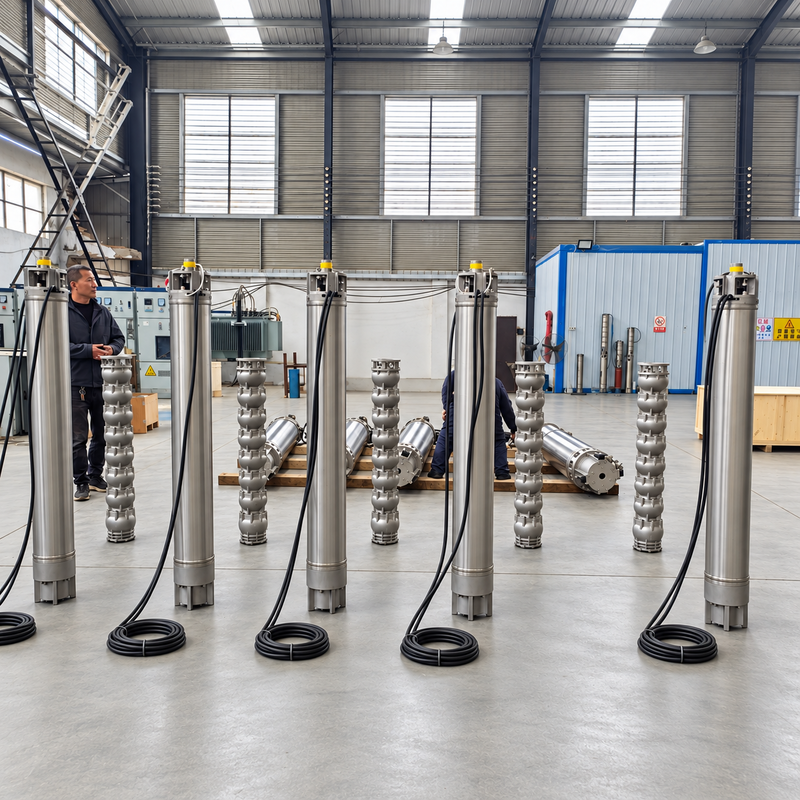
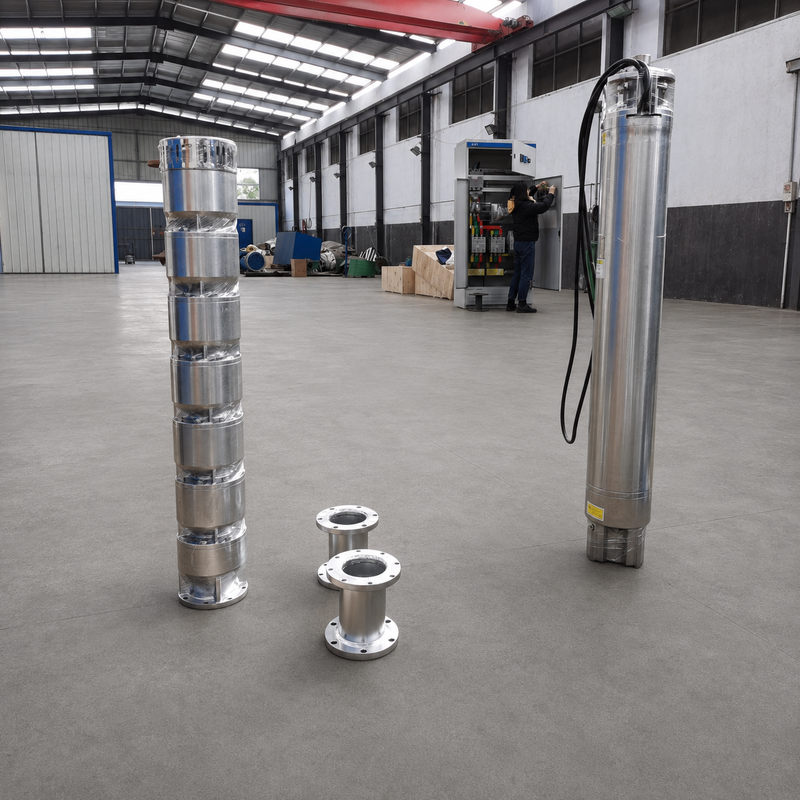
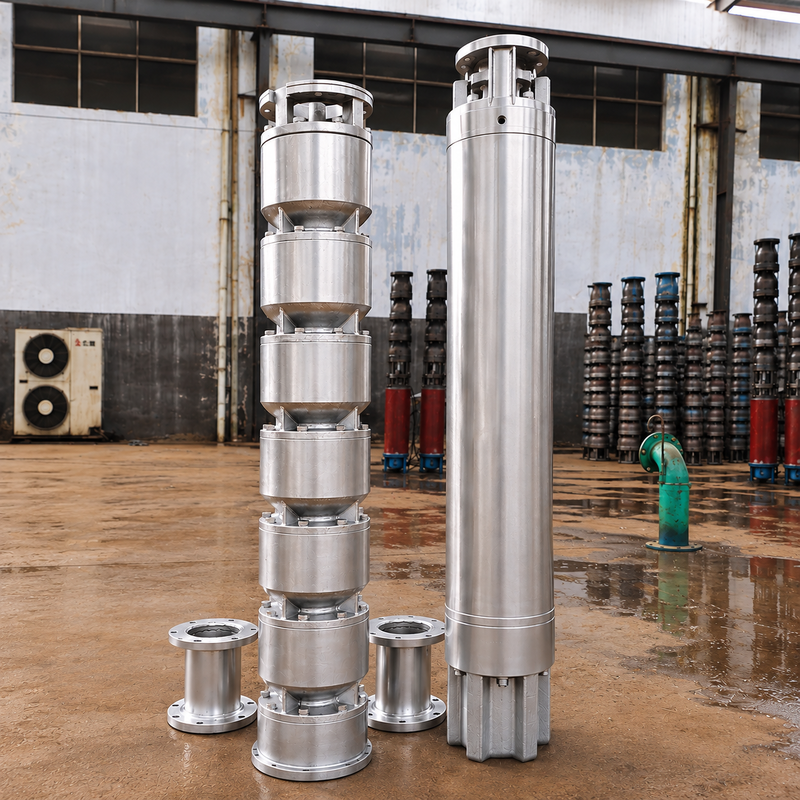
A submersible seawater pump must do more than move salt water. It needs to deliver the required flow and pressure while its submerged components remain suitable for the water and operating conditions.
At SLAPK, we start with your project requirements: where the water comes from, how much you need and where it must go. We then review the hydraulic duty, material requirements and installation arrangement to identify a suitable pump configuration.
This approach supports seawater intake and transfer projects without treating every coastal site as the same application. A beach well, an aquaculture intake and a seawater storage tank can have different requirements for flow, head, solids handling and motor cooling.
Applications for a Submersible Seawater Pump
Coastal Water Intake
A submerged pump may transfer water from a coastal intake well or sump to a storage tank or treatment system. Selection must consider changes in water level, intake restrictions and the available installation space.
Aquaculture Water Supply
For marine fish farms and hatcheries, the pump may supply incoming seawater to filtration or storage equipment. Required flow depends on the facility's water exchange schedule and system layout. A seawater intake pump does not replace filtration, disinfection or water-quality monitoring.
Desalination Pretreatment Supply
A suitable pump may move raw seawater to the pretreatment section of a desalination plant. This is a separate duty from the high-pressure pumping required by reverse osmosis membranes.
Industrial Seawater Transfer
Seawater transfer or cooling-water supply can be assessed against the required duty point and fluid conditions. Heated return water, chemical dosing and contaminated seawater require additional review.
Materials Must Match the Actual Seawater
"Stainless steel" alone is not a complete material specification for a seawater pump.
Chloride-containing water can cause localized corrosion, including pitting and crevice corrosion. Grades such as 316 and 316L should not be described as corrosion-proof or automatically suitable for every seawater installation. Temperature, component design and periods of stagnant exposure also matter.
For material selection, please provide:
- Salinity or chloride concentration, with units.
- Normal and maximum water temperature.
- Water pH, if available.
- Sand content and other suspended solids.
- Details of chemical treatment or contamination.
- Operating hours and expected shutdown periods.
The proposed material specification should identify the relevant components, including pump casing, impellers, shaft, fasteners and motor housing. Describing the pump head as stainless steel does not establish the material of the complete assembly.
Where cast hydraulic components are proposed, the quotation should identify the applicable casting grade. A general material label should not replace the actual specification.
Selecting Flow, Head and Motor Power
Start with the flow your system needs during operation. For tank filling, this depends on the required water volume and the available filling time. For a process supply, use the demand of the connected equipment.
The required total head includes:
- Vertical lift from the operating water level to the delivery point.
- Friction losses through pipes, fittings and valves.
- Losses across filters or other equipment.
- Pressure required at the receiving system.
For a coastal installation, changing intake levels can alter the duty. Filter resistance may also change during operation, so both normal and higher-resistance conditions should be considered.
We select against the required flow and head together. Maximum flow and maximum head are not a simultaneous operating point, and motor power alone does not tell you how much water a pump will deliver.
Motor selection must also account for the liquid properties and the intended operating range. Freshwater performance data should not be treated as a complete seawater suitability assessment.
Installation and Motor Cooling
The installation must provide enough water above the pump intake and suitable cooling conditions around the motor.
A pump installed in a wide sump or open tank may experience different cooling conditions from one installed in a correctly sized well. Depending on the assembly and installation, a cooling sleeve or another arrangement may be required.
Provide the minimum operating water level, installation depth, available diameter and proposed pump position. Include a drawing or site photograph if possible.
Intake screening should be designed around the actual debris and solids load. This page does not establish a solids-handling rating, so sand, shells, seaweed or other debris must be discussed before selection.
Electrical Supply, Cable and Controls
The motor must match the available voltage, frequency and phase. Cable selection should consider motor current, the full cable route, voltage drop and submerged service conditions.
The cable jacket, cable entry and sealing arrangement also need to suit the intended exposure. A stainless steel motor housing alone does not confirm that the complete electrical assembly is suitable for seawater.
Control requirements may include low-water-level protection, motor overload protection and monitoring appropriate to the selected installation. Variable-speed operation requires a review of the pump, motor, cooling conditions and permitted speed range.
Production and Supply Scope
Our pumps are produced according to the confirmed order configuration. Pumps are tested before shipment and packed after passing the required checks.
The quotation should clearly identify the pump and motor assembly, material specifications and supplied accessories. Cable length, control equipment, valves and installation hardware should be listed individually so that the supply scope is clear before ordering.
Frequently Asked Questions
Can a standard freshwater submersible pump be used in seawater?
Its seawater suitability cannot be assumed. Wetted materials, motor housing, seals, cable and operating conditions must be reviewed before use.
Is a 316L stainless steel pump always suitable for seawater?
No. Suitability depends on the complete design and exposure conditions. A material grade alone does not establish the service life of the pump.
Can this pump supply an aquaculture system?
An appropriate configuration can be assessed for seawater intake or transfer. Selection requires the flow, total head, water conditions and details of the connected treatment equipment.
Can it pump sandy seawater?
That depends on the selected pump's permitted solids conditions. Provide the sand concentration and particle size so the proposed model can be checked.
What information is needed to select a model?
The main inputs are required flow, total head, seawater conditions, installation details and electrical supply. If the total head is unknown, send the water levels, pipe dimensions and delivery requirements.


 Your message must be between 20-3,000 characters!
 english
 français
 Deutsch
 Italiano
 Русский
 Español
 português
 Nederlandse
 ελληνικά
 日本語
 한국
 العربية
 हिन्दी
 Türkçe
 indonesia
 tiếng Việt
 ไทย
 বাংলা
 فارسی
 polski