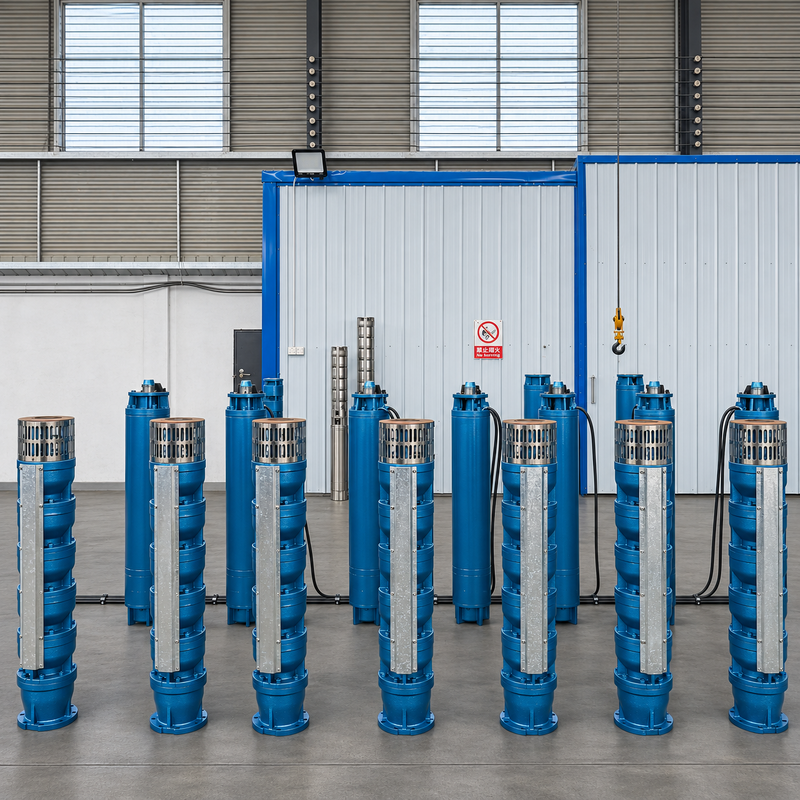
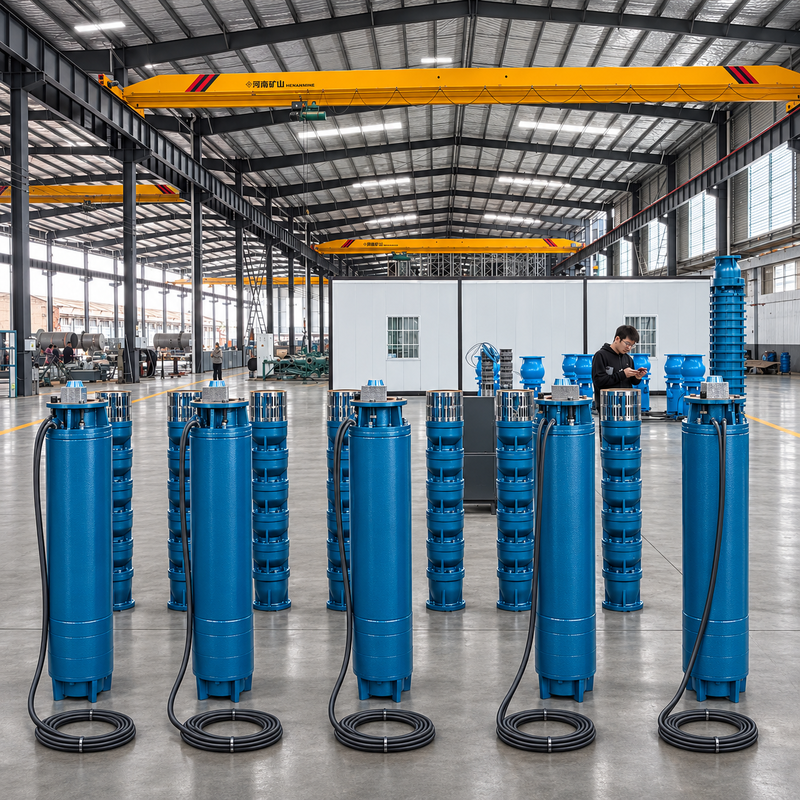
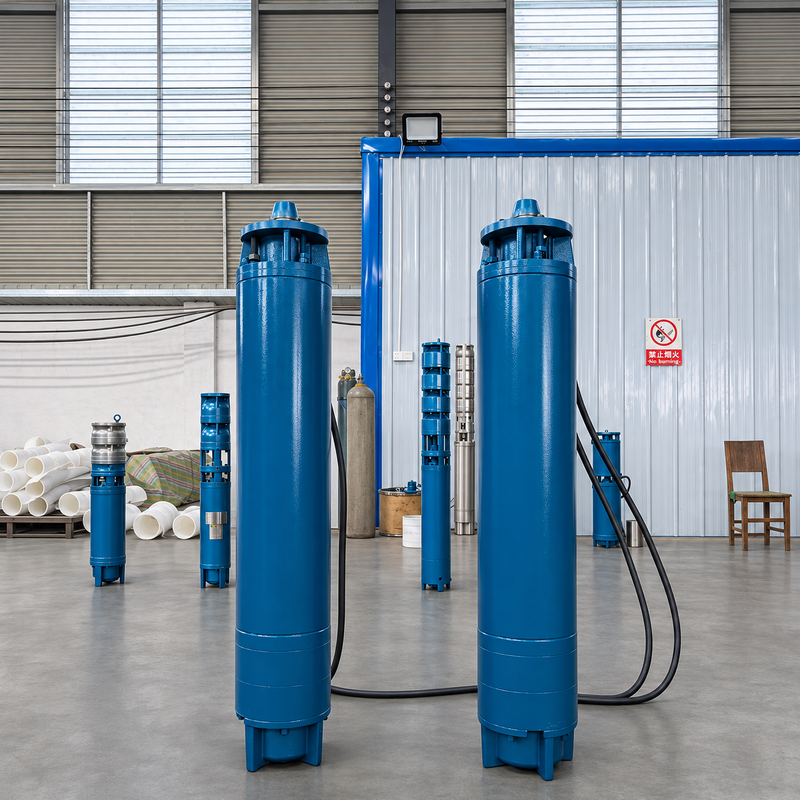
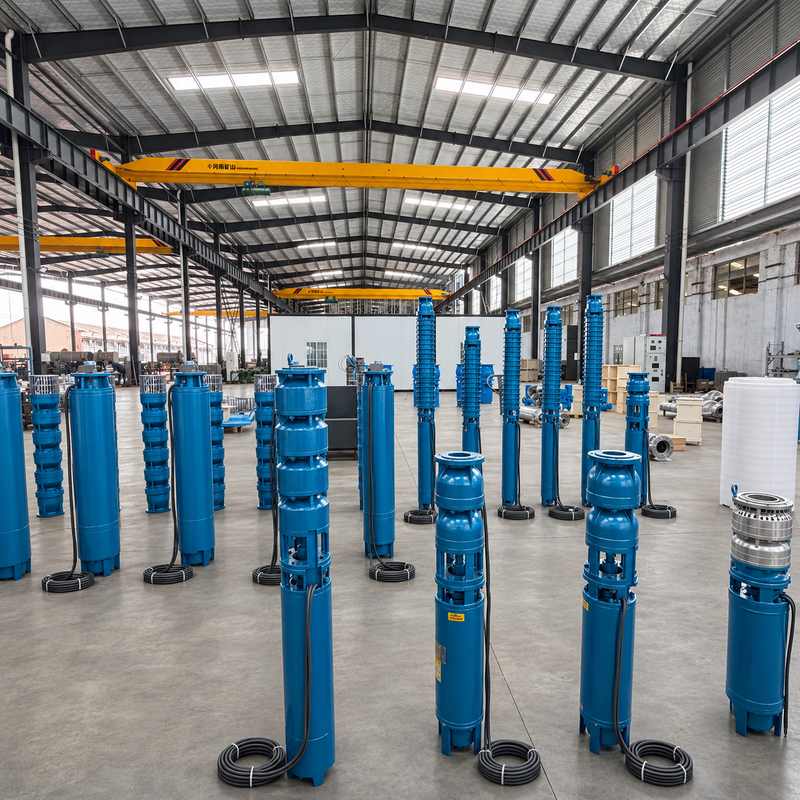
An industrial storage tank can lose level even while its well pump is running. Whether it recovers before the next production shift depends on the difference between the water entering the tank and the water the plant takes out. Our SLAPK 200QJ80-22/2 is a 7.5kW deep well submersible pump with a nominal duty of 80 m³/h and 22 m head. We assess it against the required inlet flow during refilling, not just the tank capacity or the factory’s average daily consumption.
Technical Specifications
-
Model: 200QJ80-22/2
-
Motor power: 7.5 kW
-
Nominal flow and head: 80 m³/h and 22 m
-
Catalog flow range: 74–86 m³/h
-
Catalog head range: 19–25 m
-
Discharge outlet: 4 inches
-
Pump body and impeller materials: Identify in the quotation
-
Motor voltage, frequency and phase: Confirm for the supplied configuration
The nominal duty identifies the model; the flow available at your site depends on the pump curve and system head. The catalog ranges do not establish that the pump delivers 86 m³/h at 25 m head.
Size for the Refill Window, Not the Full Tank Volume
Suppose the plant wants to restore 120 m³ of storage in two hours between shifts. That calls for a net increase of 60 m³/h. If production continues drawing 20 m³/h from the tank, the well pump must supply 80 m³/h at the tank inlet. If the same refill takes place during a shutdown, with no draw-off, the requirement falls to 60 m³/h.
These are materially different purchasing requirements. The first matches the model’s nominal flow and needs a head check. The second lies below its listed flow range and warrants a different selection review. Providing the usable volume between the tank’s low and high levels is more useful than providing its total nameplate capacity.
Identify Where the Well Pump’s Duty Ends
For a free outlet over the top of a vented tank, we calculate lift from the pumping water level in the well to the pipe outlet and add the pipe and fitting losses at the required flow. If a separate booster takes water from that tank to the factory, its delivery pressure belongs to the booster duty. Adding that pressure again to the well pump requirement would overstate the head needed for filling.
Tell us if the inlet is submerged, passes through a restrictive valve, or feeds a pressurized vessel instead. Each arrangement changes the downstream conditions. A simple drawing showing the wellhead, tank inlet, water levels and valves is often sufficient to begin.
Choosing Between the 4kW and 7.5kW Models
Both the 200QJ80-11/1 and 200QJ80-22/2 list a flow range of 74–86 m³/h and a 4-inch outlet. Their head ranges differ: 8–14 m for the 4kW pump and 19–25 m for the 7.5kW pump.
For example, if the plant requires 80 m³/h at 21 m total head, the 4kW model is outside its listed head range. The 7.5kW model merits a curve check. If the actual system requires substantially less head, we would reconsider the selection rather than recommend the larger motor simply because the tank is large.
What to Specify for a Replacement Pump
If an existing pump takes too long to refill the tank, send us its nameplate, the observed filling time and the plant draw-off during that period. A slower rise in tank level can result from increased consumption even when pump inflow has not changed. Where available, a flowmeter reading on the tank inlet helps distinguish the two.
For automatic operation, specify the low-level start and high-level stop positions, usable volume between them, and whether the well and tank are controlled from different locations. We review the proposed motor, cable, controls and outlet connection against the installation. Any material requirements for the pump body or impeller should be stated separately; the QJ casting process alone does not identify the material grade.
Frequently Asked Questions
Can the pump serve a 200 m³ tank?
Tank capacity alone is insufficient. A 200 m³ tank may need only 40 m³ replenished between level settings. Tell us how much must be restored, how quickly, and whether production draws water during that time.
Does a 22 m nominal head mean the tank inlet can be 22 m above the wellhead?
Not necessarily. The well pump must also supply the lift from the pumping water level to the wellhead and overcome pipe losses. We need the inlet elevation and pumping water level relative to the same reference.
Can SLAPK quote only the pump, without a new panel or pipework?
State what you intend to retain and what you want priced. For retained equipment, provide its specifications so we can check compatibility and distinguish existing items from the proposed supply.


 Your message must be between 20-3,000 characters!
 english
 français
 Deutsch
 Italiano
 Русский
 Español
 português
 Nederlandse
 ελληνικά
 日本語
 한국
 العربية
 हिन्दी
 Türkçe
 indonesia
 tiếng Việt
 ไทย
 বাংলা
 فارسی
 polski